

Most real turning points have a moment when you can sense the change before anyone makes an official announcement. That moment in the AI world occurred on Tuesday morning when Andrej Karpathy announced his joining Anthropic in a single paragraph on X. In its first hour, the post received close to three million views. By the afternoon, the tech sector was engaged in its usual activities: analyzing, arguing, and interpreting what might or might not have been stated.
At this point, Karpathy’s career is essentially a chronology of contemporary artificial intelligence.
Along with Sam Altman and Ilya Sutskever, he co-founded OpenAI in 2015. These two individuals would go on to define the public discourse surrounding artificial intelligence. He departed for Tesla, where he oversaw the Autopilot computer vision team and wrote neural network code in buildings where completed cars were waiting in rows outside the factory doors. He rejoined OpenAI in 2023, publicly stood up for Sam Altman during the turmoil in the boardroom that momentarily ended Altman’s employment, and then quietly left the company once more in early 2024. After that, he founded Eureka Labs, an AI company that focuses on education, and he became more than just a researcher—he became someone the general public genuinely paid attention to.
The impact on the public is not insignificant. It didn’t just start a discussion when Karpathy came up with the term “vibe coding” to describe a method of software development in which you give the work to an AI and basically supervise the vibes. It was named Word of the Year by Collins Dictionary. As businesses rushed to develop rival AI coding agents, stock valuations reportedly changed by tens of billions. Conversations among individuals who had never written a line of code began to use the phrase outside of the tech community. Notably, Anthropic’s Claude was the tool he used to write that initial post. For months prior to having an employment contract, he was Anthropic’s unpaid hype man, as one online observer put it.
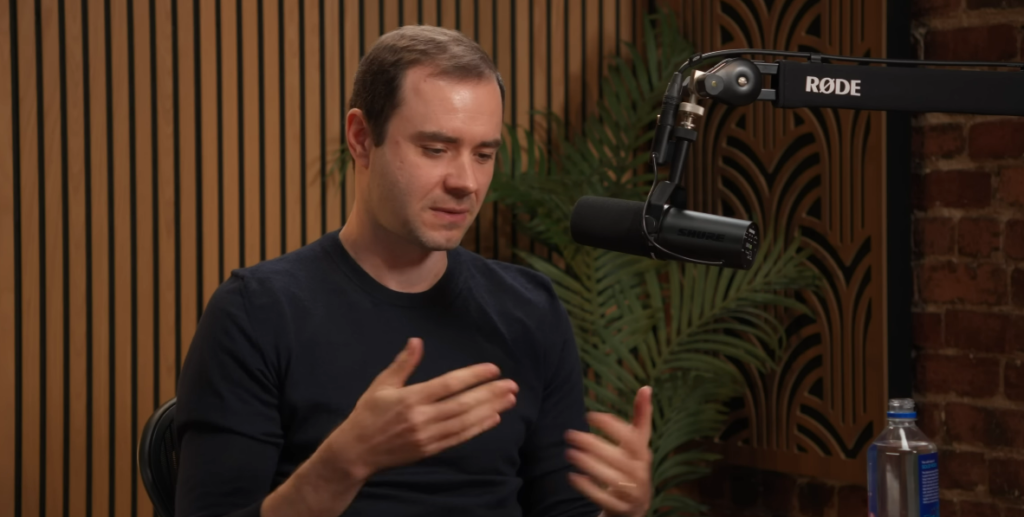
Pretraining, the extensive, computationally intensive process by which frontier models acquire their fundamental skills, is the focus of his mandate at Anthropic. More precisely, he will be assembling a team to use Claude to speed up pretraining research itself. This is basically the “autoresearch” experiment he conducted in March, in which he allowed an AI agent to modify its own training code for two days without supervision. The same modifications applied to a larger model reduced training time by 11% after 700 experiments and 20 self-discovered optimizations. Only half-jokingly, he described the technique as “part code, part sci-fi, and a pinch of psychosis.” Apparently, Anthropic chose to provide him with a budget and a team.
The larger picture of all of this is difficult to ignore. Recently, Anthropic’s secondary market valuation surpassed $1 trillion, surpassing OpenAI. In February, the company closed a $300 billion funding round at a valuation of $380 billion. Its rivalry with OpenAI has become increasingly personal; the CEOs of the two companies reportedly refused to shake hands during a joint photo opportunity, and public accusations have been made over incidents that sound more like a long-running dispute between people who once trusted each other than corporate rivalry. Karpathy, a founding member of OpenAI, enters that environment carrying his audience, his autoresearch experiments, and his reputation, all the way to the pretraining floor of the competition.
What exactly Karpathy’s presence will change in quantifiable terms is still unknown. At this level, talent hires are rarely based on the direct productivity of a single individual. They have to do with signal, belief, and which room the most intriguing researchers wish to be in. Karpathy appears to think that room is at Anthropic for the time being, and in this industry, opinions like that tend to spread quickly.
