

A seventeen-year-old is attempting to figure out how to write a thousand words that matter somewhere, be it a kitchen table in Mexico City, a dormitory in Shanghai, or a school library in Seoul. Not an essay for a college application. It’s not a history test. Something more akin to what you’d read in a policy journal—analytically supported, globally minded, and persuasive enough to withstand a fifteen-minute oral defense in front of judges from one of the most prestigious publications in the world. Every cycle, thousands of students attempt to meet the standards set by the Harvard International Review Academic Writing Contest.
Since its founding in 1979, the Harvard International Review has consistently operated at the serious end of the spectrum. Forty-three heads of state, numerous Nobel laureates, and prominent policymakers from around the globe have contributed to its pages. In hindsight, the choice to allow middle and high school students to participate in an academic writing competition seems like a clear continuation of that goal. Younger students, especially those attending international schools, are becoming more interested in delving deeper into global issues. The competition, which began in 2020, quickly attracted that audience.
The contest’s requirements are really stringent. The word count for submissions must be between 800 and 1,200, which is both long enough to present a compelling case and brief enough that each sentence must be justified. Op-eds are not accepted by the HIR. Citations from reputable sources must be included, along with analytically supported viewpoints on underappreciated global issues. After that, finalists present their work in a fifteen-minute live virtual defense while answering questions from judges. It’s not an easy task for a high school student to handle. Some students might find the defense to be more illuminating than the actual writing.
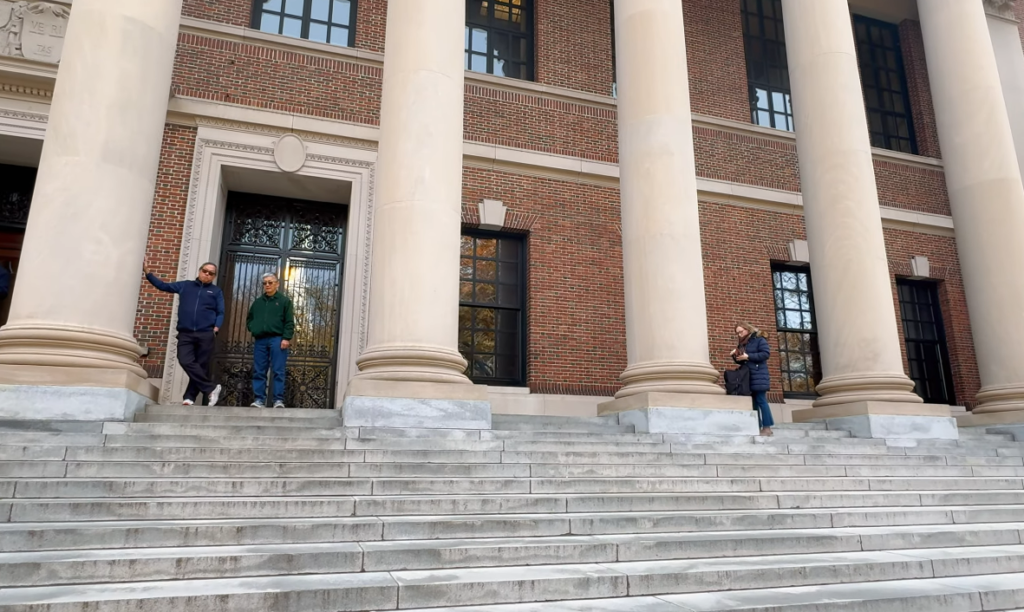
The variety of subjects covered by the Spring 2025 medal winners is remarkable. Gold medalists wrote about the environmental impact of artificial intelligence, illegal sand dredging and coastal displacement, marine genetic resource law, and borderless cybercrime networks in Southeast Asia. Silver medalists examined everything from BTS’s ARMY as a kind of international activism to digital currencies issued by central banks. A Dulwich College Seoul student wrote about the EV empire in China. One from Phillips Academy Andover investigated whether Seoul ought to think about acquiring nuclear weapons in the event that Trump were to return. These are not summaries of book reports. They are arguments with actual stakes, actual supporting data, and actual viewpoints.
Reading the list of winners gives me the impression that the students who were most interested in this competition have already outgrown the global awareness that is taught in the majority of school curricula. The subjects they select—Krill overfishing and geopolitical tensions, the sinking of Jakarta, India’s pharmaceutical dominance, Taiwan’s semiconductor sovereignty—indicate children who are reading beyond the curriculum, picking up on details that adults occasionally overlook, and posing more challenging questions than those on standardized tests. It would be simple to write off the entire endeavor as resume-building, and for certain participants, it certainly is. However, the caliber of the winning pieces indicates that for many of them, something more authentic is taking place.
The high school division is split into three themes for 2026: Global Culture in the Digital Era, Security in a Multipolar World, and Technology, Innovation, and Power. The contest runs three cycles a year, spring, summer, and fall/winter, giving students multiple chances to submit. With the theme of inventions that have altered our way of life, the middle school division for seventh and eighth graders adopts a more compassionate approach. Commendations, certificates, bronze, silver, and gold medals are among the awards; the top three percent worldwide receive gold. The writing experience itself appears to be the more lasting prize, though it’s still unclear if medals from this competition have the same weight in college admissions as, say, a national science competition.
This competition is worth watching because of the model it represents, not just the student work. The gap between high school and actual intellectual contribution is smaller than traditional gatekeeping implies, as academic institutions are realizing more and more. When a sixteen-year-old can write a thorough thousand-word analysis of transboundary groundwater governance in urban Africa, defend it under scrutiny, and have it published under the Harvard banner, they are engaging in something that resembles the real practice of ideas rather than education.
